'We should not underestimate the power of Hindutva.'

Member of Parliament Rajeev Chandrasekhar feels that the economy today is bankrupt due to big spending towards social welfare programmes such as NREGA.

The generation of quality jobs and skill development should be the focal point, cutting across ministries and departments, asserts Nivedita Mookerji.

Reserve Bank Governor Raghuram Rajan on Friday said banking sector will see major changes in the coming years.

There is nothing to be worried about as bilateral ties are robust with solid foundations. Both are on the same page on the economic and defence/security ties bilaterally and globally and that shall continue irrespective of change in political dispensation in either country, points out Dr Rajaram Panda.

'It has a natural inclination to foster as much competition among civilian politicians as possible.'

The central government's Great Nicobar development project, proposed around an unprecedented transhipment port, will be executed to keep environmental impact minimal, and is essential as it is of national importance, the government has said amid calls to abort the controversial project due to ecological concerns, the Centre said in an official statement.

The departing directors had criticised the club's handling of a social media scandal and expressed doubts about the board's ability to handle the implications of the COVID-19 pandemic, which has led to a 70% players' pay cut.

'This is going to generate a new debate on reservation because the quota for Economically Weaker Sections is 10%, and that is for nearly 16% of the population.' 'For 16% you are giving 10%. This is set to raise eyebrows among the OBCs after the caste survey.'
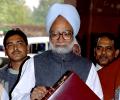
'We are going to need more technical people in government.' 'You can't expect a generalist to understand the complicated world of financial engineering.' 'I regret to say that most of our politicians have no competence to deal with these things. Nor is there a willingness to learn.'

'The Opposition will continue to be attacked through misuse of agencies, civil society will be force-marched towards extinction and India's plummeting on global indices will continue.' 'Minorities and especially Muslims will continue to have open season declared on them. Institutions will continue their decline,' predicts Aakar Patel.

For India to view the new Sri Lankan leadership only through the prism of the past or through their narrow view on China, is fraught with possibilities that should be avoided, asserts N Sathiya Moorthy.

This does not mean isolating parochialism but of new way of thinking about economic systems, says Rajni Bakshi.

'As we enter 2025, it must be acknowledged that there is a convergence of capital, influential people (from business and politics) and technology deciding the destiny of others in the name of pride, patriotism, nationalism, nation building, all of it thinly veiled disguises for personal profit and glory,' asserts Shyam G Menon.

The fundamental construct of India's neighbourhood policy still needs to be what Vajpayee postulated, Manmohan Singh embraced, and Modi energised. It's just that we need to junk domestic politics and excessive religiosity, while acquiring much humility and a renewed respectfulness towards our neighbours, recommends Shekhar Gupta.

A Chinese government newspaper accuses the Modi government of manipulating economic data to project the 'myth' that India has caught up with the US and surpassed China.
'The assessment of most people is that there is a stable economic and political environment in India and that is attractive to investors.'

Apart from the human body, human food will bear direct repercussions. From staples such as wheat, to coffee, dairy, and even the great Hilsa face the threat of reduced supply due to the extreme heat.

'Dynastic politics has become a tool of convenience for political parties. The BJP does not hesitate to accept it when it comes to its own alliance or party candidates. The same goes for the others.'

'The Opposition parties will continue to woo Chandrababu Naidu even though he has said he will support the BJP.'

A remarkable story which helped in transforming a bureaucratic organization, to a customer centric organization. This experience may inspire several government / private organizations to modify or adopt digitisation to transform their business, notes Professor N Ravichandran (retd).

Ahead of the upcoming elections, political parties have started announcing incentives to benefit women, but what do women truly seek for genuine gender parity, asks Nivedita Mookerji.

An astrologer told Ramesh Menon that he was increasingly having worried parents asking him about the future of their children who were showing serious behavioural changes like lack of tolerance towards others, shunning social interaction, and even violent behaviour. They were worried because they had never ever seen such traits in their children before the pandemic.

India must be prepared to deal with climate disasters, geopolitical confrontations, and social strife linked to global events, asserts Jayant Sinha, chairman of Parliament's Standing Committee on Finance.

Beti Bachao Beti Padhao is for protection and education of girl child

Times have changed, situations have changed, but the basic nature of superpower geo-politics remains the same and so also India's diplomacy -- call it non-alignment, strategic autonomy or neutrality; it all depends on the time scale, notes Rup Narayan Das.

There were certainly qualities adhering to the Tata Group, which emanated from the persona of Ratan Tata. Most notable of these would be the low profile he maintained, which sharply contrasted the in-your-face celebrity status, celebration of wealth and pursuit of importance many of liberalised India's rich, love, notes Shyam G Menon.

Borrowing from BRICS bank will help India avoid other kinds of politics emanating from the West. Overall, the BRICS institutions will necessarily adopt alternative ways of doing things based on their own cultural and socio economic needs, says M K Venu.

In the case of double-income couples, not more than 40 per cent of the net income of one partner should be the EMI for the property.
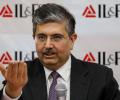
Uday Kotak has resigned as the managing director and chief executive officer of Kotak Mahindra Bank, the bank said in a stock exchange filing on Saturday.

Any move of the present government to appease the Marathas may boomerang. Eknath Shinde is a worried man with the agitation not having an easy solution, notes Ramesh Menon.

It is evident that the younger generation is increasingly choosing to postpone or completely forego the idea of getting married, observes Sybil Shiddell, country manager India, Gleeden, a discreet extra marital dating Web site.

A V Rajwade wonders if the Modi sarkar is pursuing price stability at the cost of potential social instability in both rural and urban India.

She alleged that today, the regime in power is misusing and subverting the institutions of the Constitution, and weakening its foundations of liberty, equality, fraternity and justice.
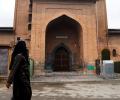
Crucial reforms in Muslim personal law, especially laws related to inheritance and adoption, need to be initiated forthwith; historically speaking, without the State's backing, hardly has any reform taken place or allowed to prevail, asserts Mohammad Sajjad.

I suggest we build a Vigyan Mandir (Temple of Science) with the ambience of a place of worship, so that it becomes a destination for pilgrims. We should embed on its walls bronze plaques describing each scientist mentioned here along with about a dozen of our ancient mathematicians, recommends Professor Kalyan Singhal, historian of science and technology.

'A pandemic like this will leave behind a trail of political, economic, social and psychological scars.' Coronavirus is going to impact every being on earth even if they do not contract it.' 'Everyone will pay a price,' cautions Ramesh Menon.

More and more young Indian women are suffering from premature menopause, some even in their 20s. Lifemojo weighs in.

'Growth is predicated on the misery of large sections of people.' 'Maybe Hindutva will be used to suppress any such unrest.'

'I found it unbelievable that L&T said 45,000 jobs were waiting to be filled because of unavailability of suitable skillsets.' 'So, when the Opposition sweepingly says there are no jobs, I'm sorry... I'm not saying it's raining jobs, but there are jobs. The (skill) gap has to be bridged.'
